


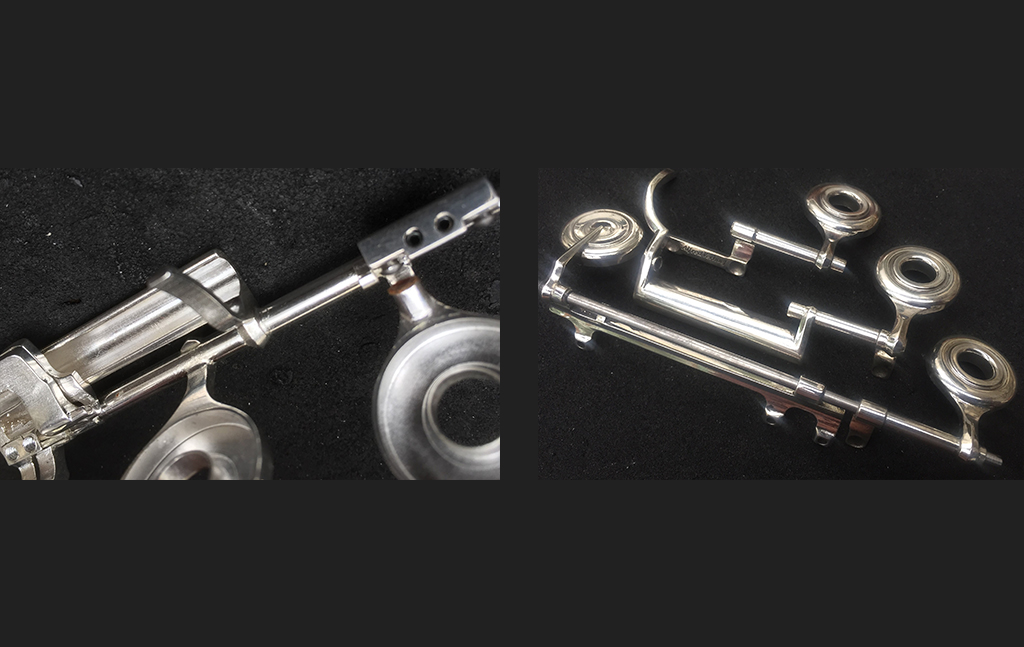
Left, details of the former AV standard left hand system: the axle is attached to the F# key and the cam at the right and turns inside the other keys and around two end screws when you play the F#. From 2020 this has been replaced by the left hand mechanism of the New 2020 system, right: all keys rotate independently around a fixed axle.
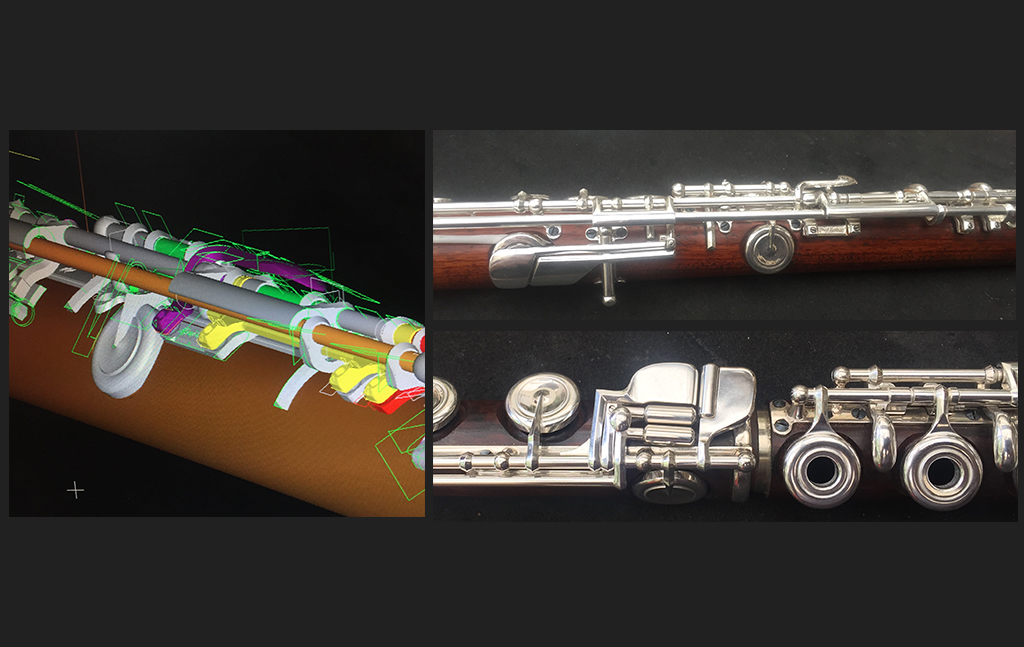
Details of the new 2020 system. See also Making Flutes. All parts have been redesigned and modulated in such way that size, strength, weight and functionality are optimally matched. All bonds between keys are easily adjustable with special screws. There are no pin-hole connections at all, only screw systems. The left hand axle was already a fixed axle in all AV flutes. Now there is also a fixed right hand axle that gives the keys a lighter run and makes the key system more reliable. The offset system became half inline. By means of two sound strips the flutist can choose between differences in sound color and responsiveness. The silver keywork has been extra 1000/1000 silver-plated.
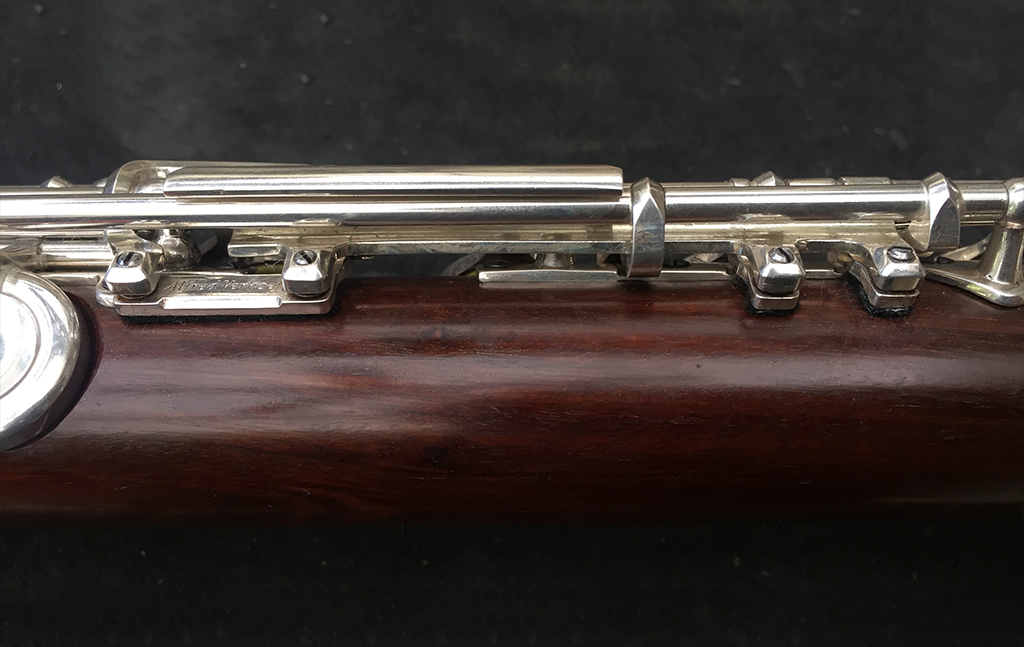
Detail of the new left hand system. Instead of a rotating axle, the four keys now rotate independently around a fixed axle, allowing for faster key action and a more consistent feel in the left hand. All connections are precisely adjustable by means of special mushroom-headed bolts.
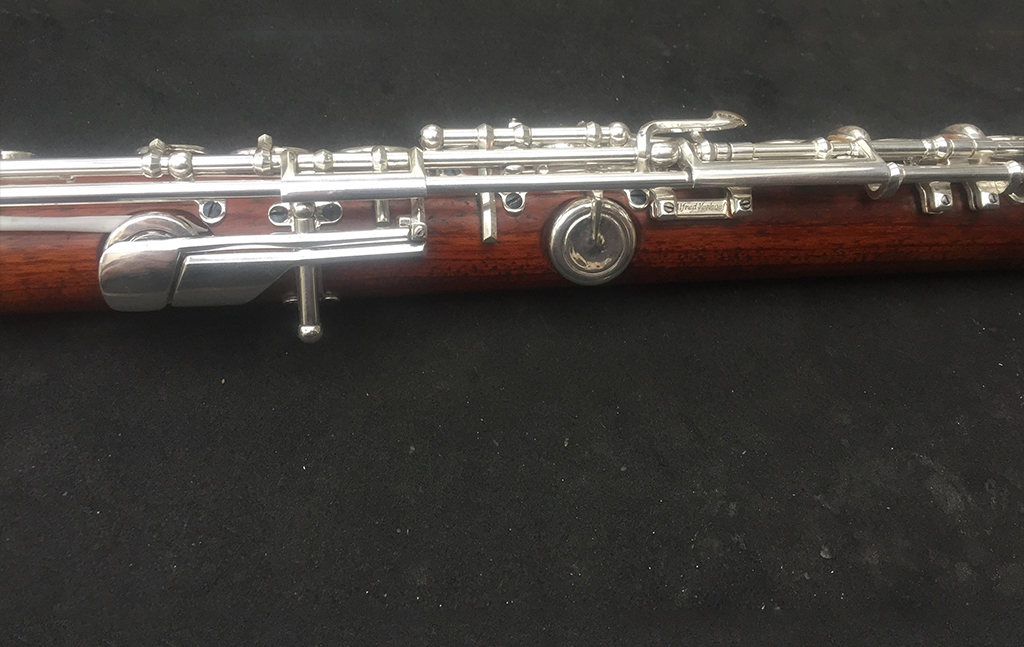
The right hand keys already had a fixed axle. Now the left hand system has one too. Even the thumb Bb is precisely adjustable. The right hand and E-mechanism bridges have been redesigned.
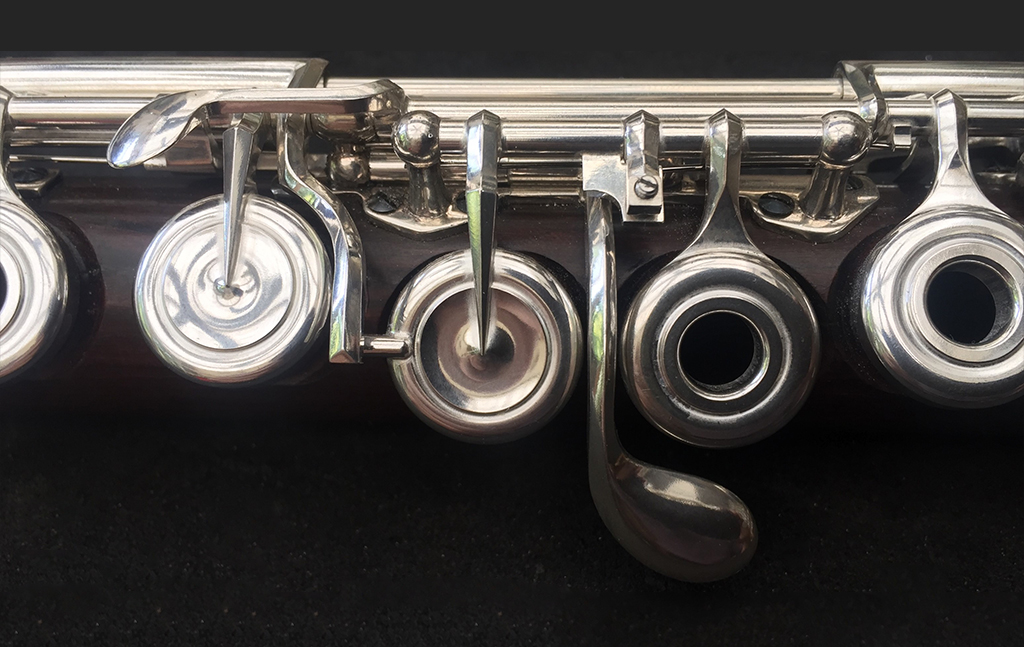
The offset system is now more in line with the other keys. Both flutists who always play on a fully offset system and those who are used to an inline flute can work well with this position. This middle ground between the two positions also has a number of technical advantages.
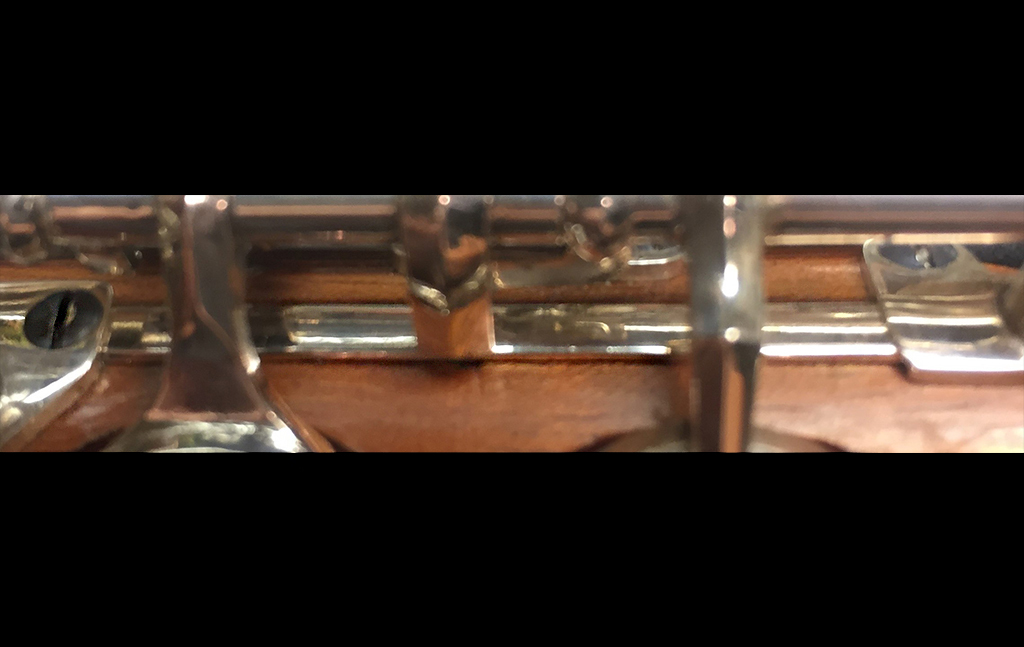
You can determine your own timbre with the AV sound strips.
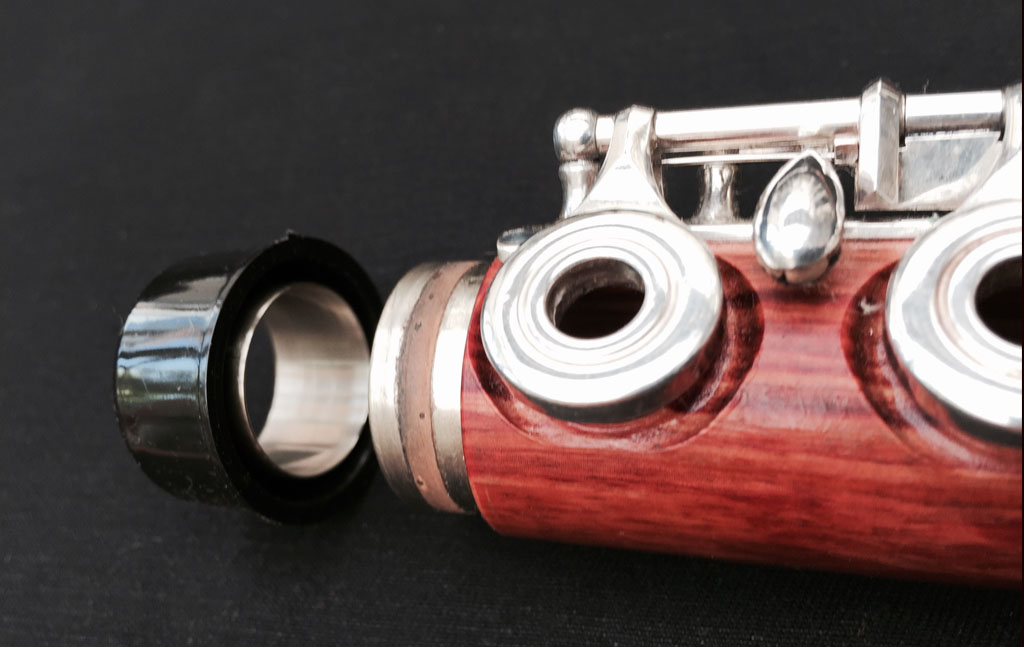
Tenon protectors have an inner sleeve. First put on the caps, then clean. The important grease now stays on the tenons and doesn't get on cloth or flute.
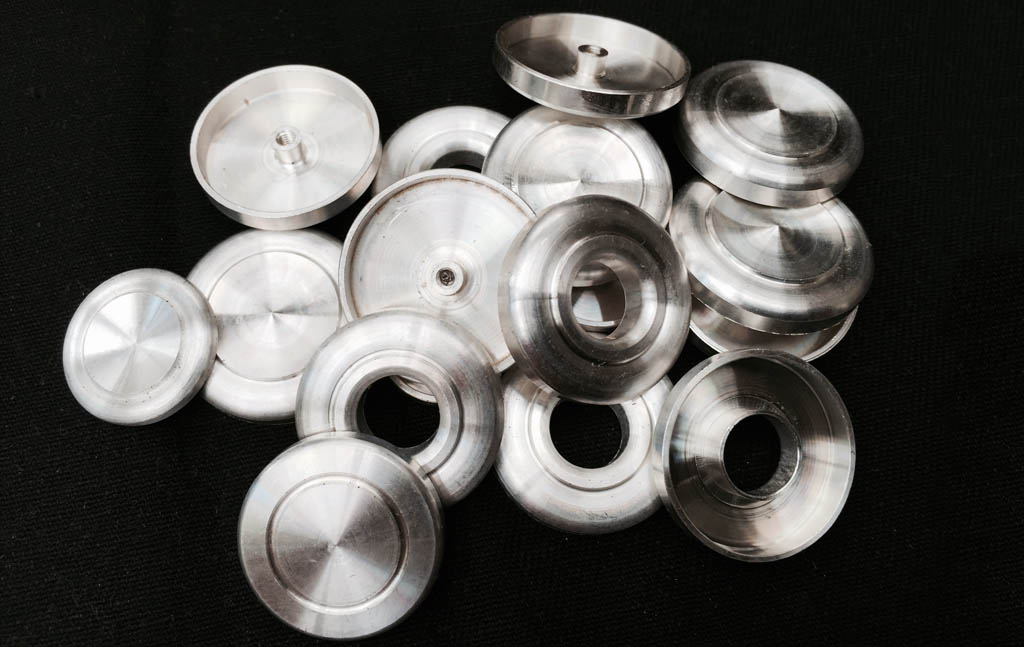
The key cups are no longer cast and finished, but turned in one go from a solid silver rod. They are even stronger and more stable.
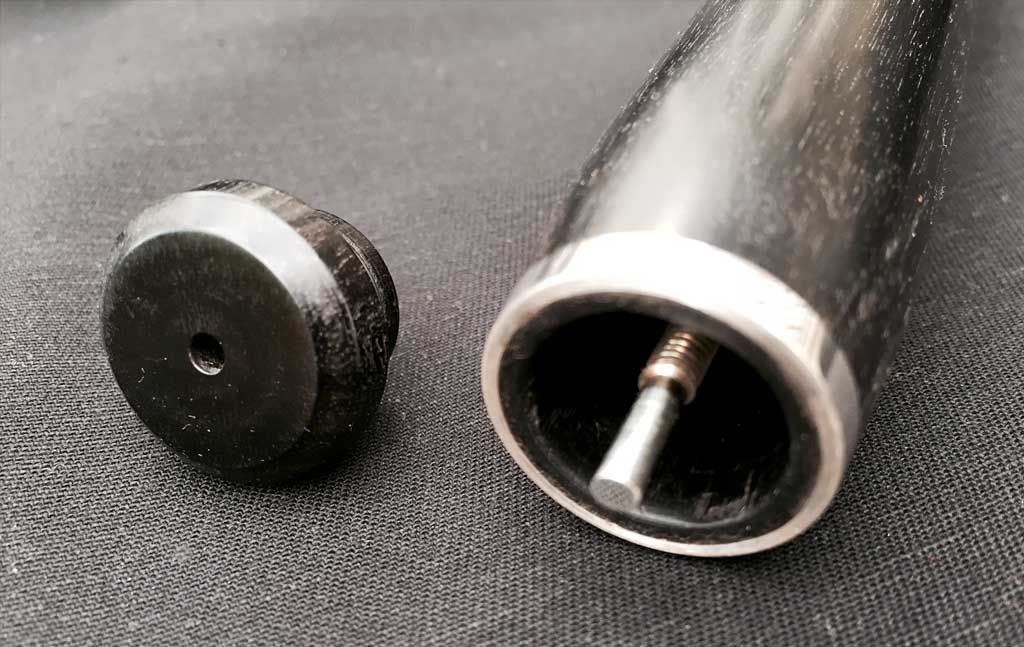
One of the most important factors for sound is the adjustment of the cork. It is now precisely fixed in the most ideal position, and even after turning, the adjustment can always be found again.
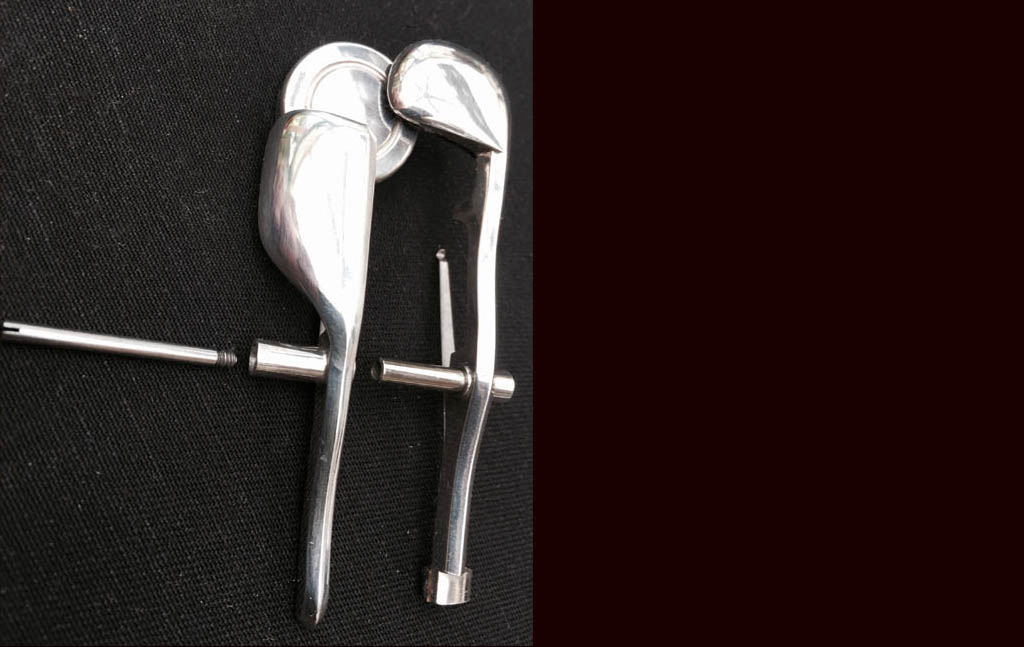
The thumb system has become much more stable. It is made with a double tube in alpaca and silver.
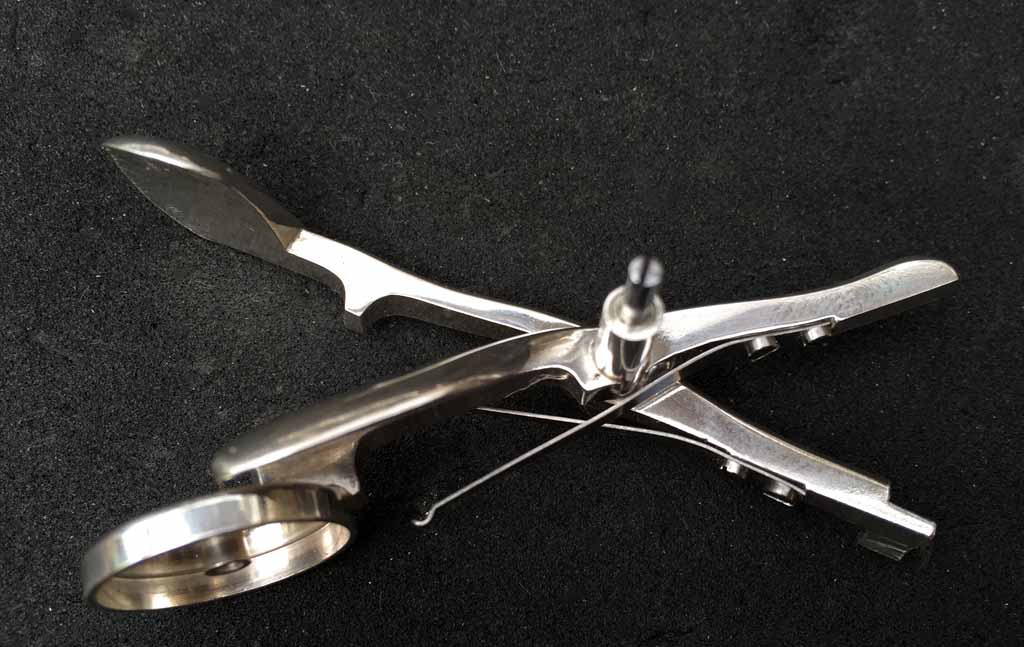
The thumb system from the side: a fixed axle and two tubes rotating around it.
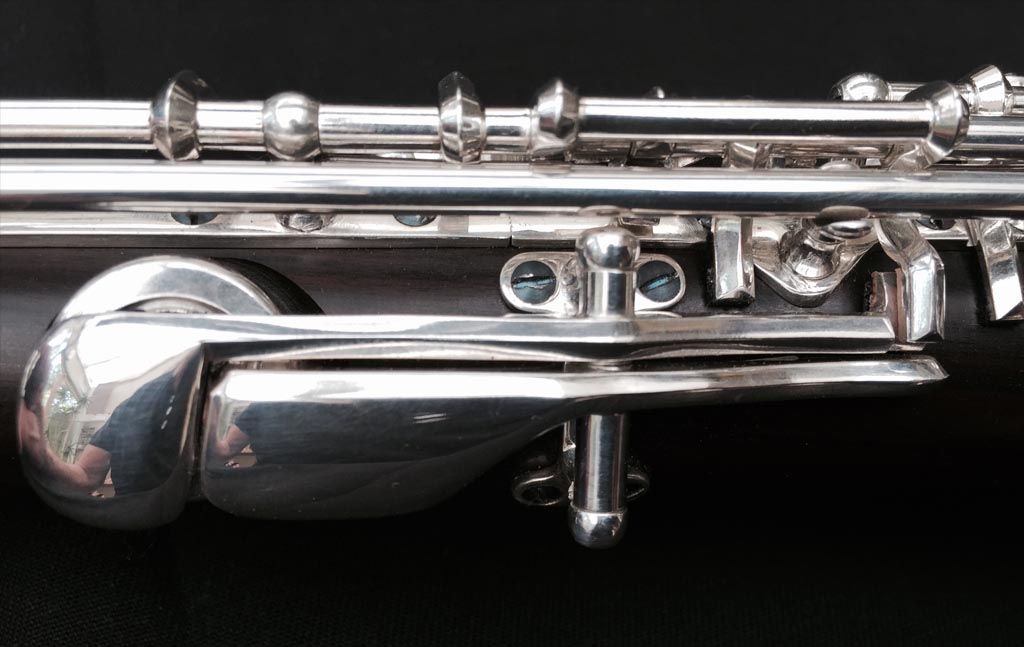
The new thumb system makes it possible to bring the keys closer to the main axle. The result is a more favorable balance of the flute in the hands.
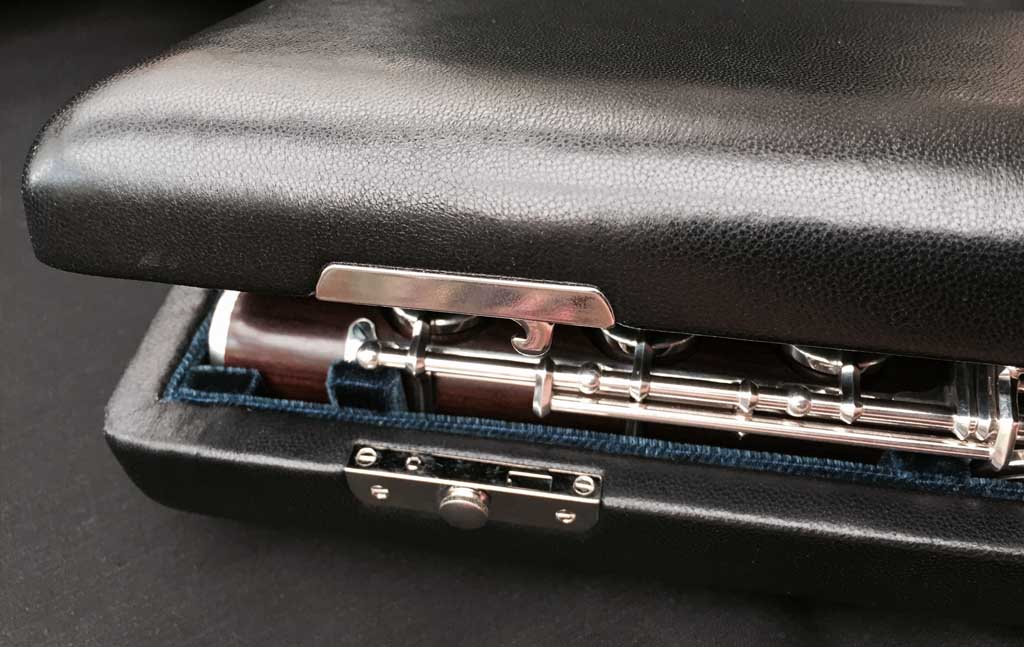
The new flute cases are even stronger and covered with the finest leather.
Flute improvements
The sound of an Alfred Verhoef flute is determined by the specific wood of that flute and its various measurements. All the measurements are equal with the exception of the diameter of the instrument, which is determined each time by the specific properties of the wood which is used. When a flute is ready to play, I make tiny changes to the blow-hole and bore until the flute begins to sing and the optimal sound is there. As a result of this, every flute is unique and there is no ‘standard’ AV flute. All the keywork is built to fit each particular flute, with the precision needed to fit the diameter of each instrument coming from skilled handiwork.
As a flute maker I am always aware that there are matters which could be improved. Technically, new developments could lead to the keywork becoming stronger, more stable or more ergonomical, helping to aid a flutists posture. It might be possible to enhance the colour or the purity of the instrument further. The pictures above show the latest developments I have made to my flutes. Some aspects of these developments are explained further under ‘Making Flutes’.